
SOP Template: How to Write Standard Operating Procedures

A standard operating procedure (SOP) describes, step by step, how a task gets done reliably. Here's a proven SOP template, real examples, a writing guide — and the faster way: extracting SOPs from the meetings you already have.

GDPR CompliantEU Data Residency

What is an SOP?

A standard operating procedure documents a recurring workflow precisely enough that any qualified person can execute it with the same result: the steps, the responsible roles, the trigger that starts it, and the quality criteria that define done.

The difference from general documentation: an SOP doesn't explain what something is — it defines how it gets done reliably. Good SOPs cut onboarding time, reduce errors, and make quality independent of individual people. They're the backbone of every quality-management system (ISO 9001, FDA, GDPR processes).

SOP examples: what good ones look like

Three examples of processes that belong in an SOP — and what the SOP captures:

Client onboarding7 steps from signed contract to kickoff: contract review, project code, kickoff within 5 business days, staffing, access provisioning, welcome dossier, internal handover.
Employee offboardingKnowledge-handover interviews, card review with the successor, ownership transfer, access revocation — so 15 years of experience don't walk out the door.
Invoice approval above thresholdFour-eyes principle: who checks, who approves, what happens on rejection, and the audit trail behind it.

The SOP template: 7 elements every procedure needs

A usable SOP template is short. If filling it in takes longer than the task itself, nobody will maintain it. This structure holds up in practice:

1. Title & objectiveWhat is achieved when this SOP is followed? One sentence.
2. TriggerWhen does the process start? (e.g. "signed contract received")
3. Responsible rolesRoles, not names — otherwise the SOP expires with every personnel change.
4. StepsNumbered steps, each with a one-sentence description and the responsible role.
5. Quality criteriaHow do you recognize that the result is correct?
6. Risks & exceptionsWhat typically goes wrong, and what to do then?
7. Version & review dateWho last verified this SOP still matches reality, and when?

How to write an SOP in 6 steps

1.Pick the process

Start with workflows that repeat often or where mistakes are expensive — not with everything at once.

2.Shadow the expert

The best source is the person who owns the workflow. Have them walk through it once, thinking out loud.

3.Capture the raw steps

Completeness first, polish later. Bullet points are fine in the first pass.

4.Structure with the template

Transfer the raw version into the 7-element structure above.

5.Run the counter-test

A second person executes the workflow using only the SOP. Every question they ask is a gap.

6.Set a review rhythm

Every SOP gets a review date. Unreviewed SOPs are a document graveyard within a year.

Or: 45 SOPs in 60 minutes — extracted from meetings

The manual method works — but it doesn't scale. The knowledge about your workflows already exists: in handover conversations, team meetings, and project retros. askSOPia extracts structured process cards from them automatically — with steps, responsibilities, and risks.

Upload a meeting transcript, review the suggested cards, approve. Every answer in the askSOPia chat cites its source — new hires simply ask instead of searching.
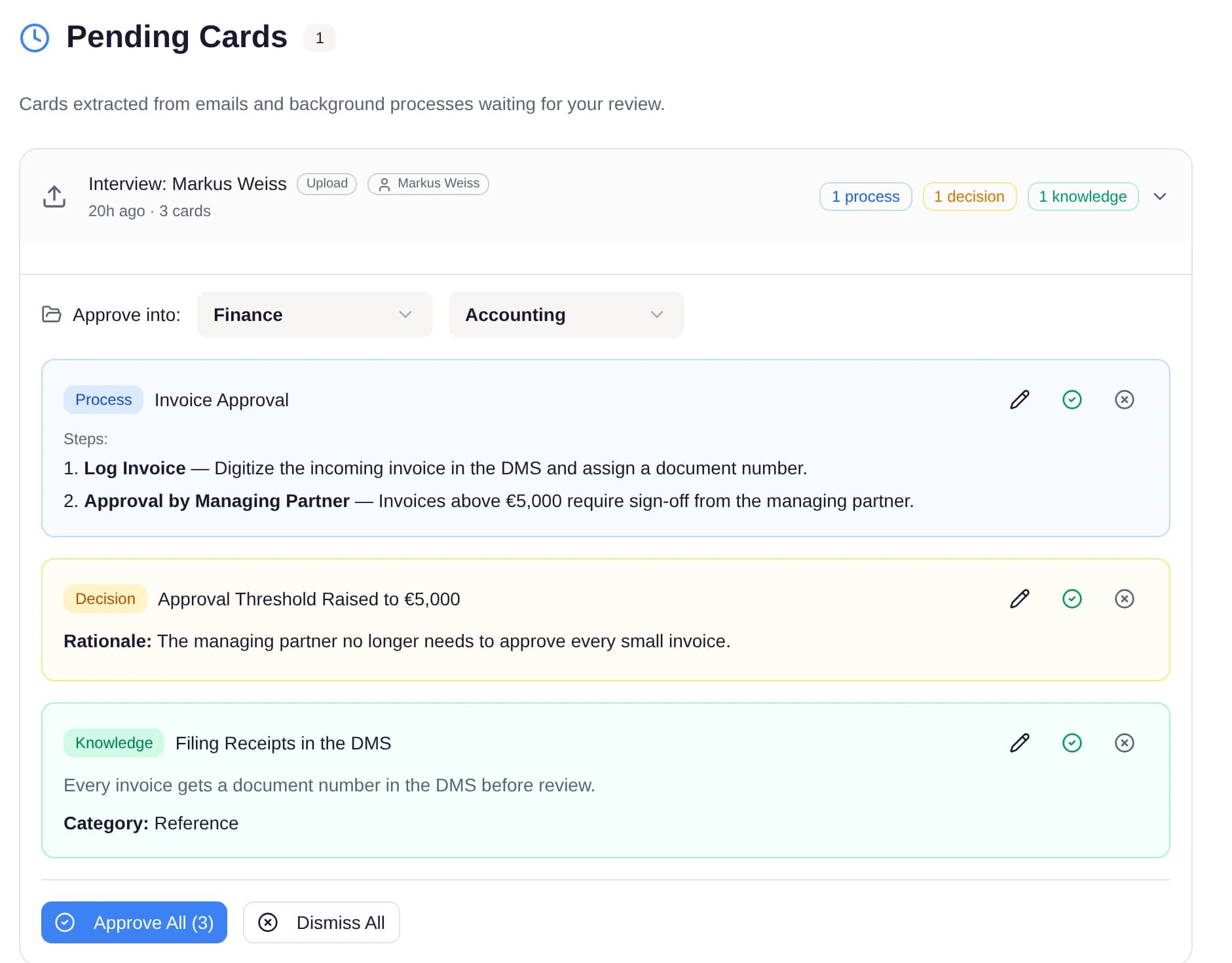
One handover interview becomes process, decision, and knowledge cards automatically.
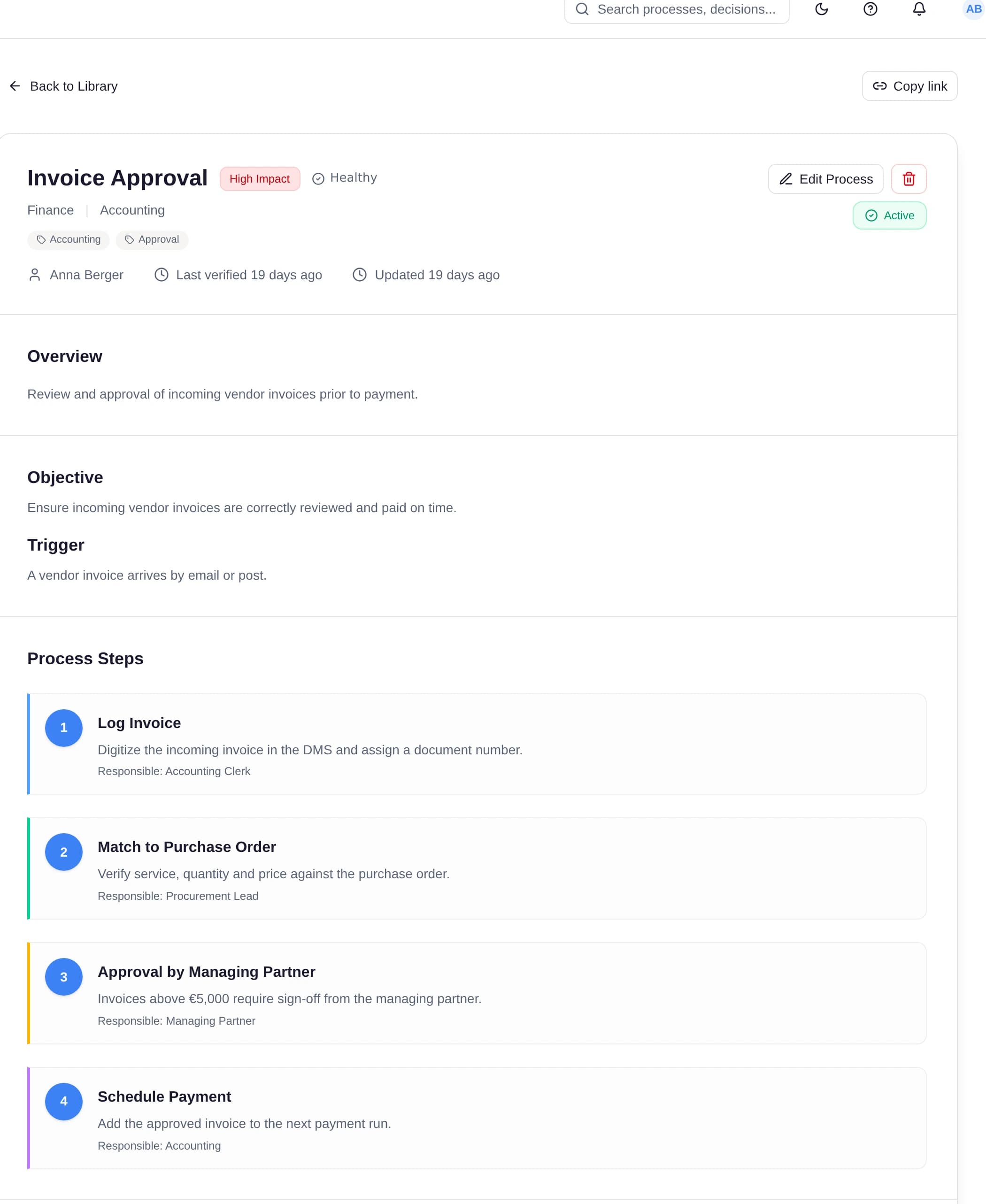
An extracted SOP in askSOPia: steps, roles, risks, verification status.

Frequently Asked Questions

SOP stands for standard operating procedure: a binding step-by-step description of a recurring workflow, including responsible roles and quality criteria.

Process documentation shows the workflow at overview level (who, what, when). An SOP goes one level deeper — concrete enough that a qualified person can execute the task correctly with nothing else.

Short and consistent: title, objective, trigger, roles, numbered steps, quality criteria, and a review date. Whether it lives in Word, a wiki, or a system like askSOPia matters less than SOPs staying findable and regularly verified.

Fewer than you'd think. Start with the 20–40 workflows that are business-critical or generate constant questions. With automatic extraction from meetings, 45 SOPs take about 60 minutes of review effort.

Yes — from material you already have. askSOPia extracts structured process cards from meeting transcripts and documents; you review and approve. Humans keep the accountability, AI does the writing.

Keep reading

Next Step

Ready to Secure Your Knowledge?

Less than the cost of a bad first month of a mis-hire.

20 minutes. No slides. No prep needed.

Start the knowledge-risk checkSee the Knowledge Sprint